History and Journal of Jesse Turpin
16 Feb 1851 A.D.
Jesse Turpin is married to Jane Louisa Smith
Jesse is Merthan Ellis’ great great grandfather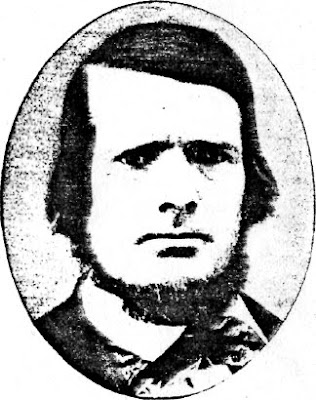
I was born in Stewart County, Tennessee on the 22 June 1816. I have always been told by my parents that my father left the place where I was born when I was three or four years old. We moved to Henry County, then a wilderness. We were about the first settlers in that County. I was put up to do hard work and received my education from my father. When I was eight or nine years old my mother died. I was sent to live with a neighbor while my father took a visit to the land of my mother. He was gone some nine months. During this time I had to do a little of everything so I soon learned what work was. Soon after my Father returned, he was married to a widow woman she had four children so my bed was made hard again. I stayed with them about a year.
I then left and went to Montgomery County and went to work with a tailor to learn the trade. We agreed that if I liked him I was to stay until I learned the trade. I soon learned that I could not stay with him so left and went to Deckson County where I fell in with a saddler. I under took to learn the saddling business. I soon found out that the man was not able to carry on business so as to justify my staying there, so I left and went home to father and helped him raise a crop. In the fall I went to my trade and continued there until I had completed it.
I was absent some two or three years from my father’s house, during this time Elders Patten, Parish and Woodruff had visited the neighborhood of my father, preaching the Gospel and plan of salvation. Some of the neighbors believed and obeyed the Gospel. During my absence I joined the Methodist church.
I had a dream in the Spring of 1836. While I was laying meditating upon the Gospel and plan of salvation, all at once I was placed In a beautiful mansion. I stepped to the door of the entry where I met a person that I thought was Jesus Christ. He introduced me into another apartment of the house. He then told me I was to act as Justice of the Peace. All at once there appeared before me a writing desk and books. He gave me a pen and I went to business. I appeared to see him go between two walls. I went to look between them and dropped my pen as I was trying to get it I awoke. This left the impression on my mind that the gift to me was the Priesthood, the Books and the laws of God. After I arrived home I felt quite zealous in the things I knew of the Gospel.
As I was conversing with my father, my stepmother said to my father "Old Man Jesse is a Mormon." It being the first time I had heard the word, I denied the charge, but if believing in the truth made me a Mormon, Amen to it.
In the course of two or three weeks I heard Elder Woodruff preach and I believed what he said. A few weeks following I heard Elder Patten and Parish preach. I was thoroughly convinced of the truth of their message. I went forward and was baptized by Elder Woodruff and confirmed by Elder Parish on 14 April 1836. It was not known unto me what my dream really meant until I was immersed into the water for it then came to me very plain and I understood all my dreams for my spirit told me.
I was called to a conference on 28 May 1836, where I was ordained to the office of a Priest in which calling, I labored for nearly two years. It has been understood that I could not read nevertheless I started out preaching in August. As well as I recollect, I fell in with B.T. Boy Aston and preached with him several times. I met with the Brethren in the State of Kentucky, there I was counseled to go to Ohio which I did. I went to school that winter in Kirtland.
In the Spring of 1837, I went on a mission to Virginia all alone. I preached and prayed by the power of God. My labors were extensive. I had more callings than I could fill. God blessed me with wisdom and understanding.
In the spring of 1838, I met in conference with Father Joseph Smith and D.C. Smith and others. There I was ordained an Elder. On 1 March 1838, I left Ohio and went to Tennessee, and visited my father, who received me kindly. I preached to my old neighbors and went to school some two months. I then went to Shellville, Tennessee and worked at my trade. I then went to Quincy, Illinois. From there to Nauvoo, Illinois in 1839, I preached by the way and at every opportunity I had after leaving Ohio until I arrived at Quincy. The winter of 1839, I carried on my saddling business in Nauvoo. I attended April Conference in 1840 where I was received into the Seventies and ordained as one on 14 April 1840.
I started out with William Rust to visit the Eastern Country. We journeyed two laymen and kept company with Elders Hyde and Page on their way to Jerusalem. We later made leave for Quincy and got a boat to St. Louis, on our way over to St. Louis I was invited to preach to a large congregation of travelers. When we landed in St. Louis we boarded the steamer "Polten." We left the Polten at Sisterville, Virginia and journeyed through mud and rain up Indian Creek and down Glenmule Creek. We arrived at Brother Boggess’. The distance we traveled from Nauvoo to Virginia was thirteen hundred miles.
We traveled great distances to preach the Gospel. We talked by candle light very often. In the small village called Brandonville I taught and preached on the first principles of the Gospel. The reason I had to do so much preaching in the meetings was because my companion had never done much preaching and he felt a delicacy of blushfullness. This the Lord had enabled me to overcome. The Lord blessed us with his Spirit. I went to Harrison County, Virginia to visit Brother Alonzo Boggess’. This one evening, we had a special course of business to talk over. It was the matter of asking for the hand of his daughter in marriage. I went to Clarksburg to secure a marriage license. On 24 September 1840, I was married to Eliza Ann Boggess at Clarksburg. There I got material to work again at my saddling business.
On 1 April 1841, I left my wife at her father's home and took leave to Preston County to visit my little flock. I went back to Nauvoo to my father-in-law's to help build a fence.
After one evening of preaching by candle light, I spent the night with Mr. Clark. The next morning I took a walk as far as the "Point," a place where the shipping lay in the port. There was no shipping in so I never had the pleasure of seeing the ships as I expected. While we were still at the Point there arose the heaviest rain storm I had ever witnessed.
At one time I rented the Union Hall to preach in at the low rate of $2.00 per day. I advertised in the Morning Sun (newspaper). I believed that the wickedness and abomination of this place is enough to make the blood of a more reflecting mind run cold. Idolatry and superstition prevailed there. One Sabbath morning as I was going to a meeting, I was talking with my friend, I saw a boy about eight years old in the act of drowning. I sprang down the bluff, jumped into the river and stretched out my hand for him but was unable to get him. One of my companions reached in below me and caught the boy and saved his life. We then journeyed onto our meeting. I stood in my wet clothes and preached. When I had finished I told them of my circumstances and they took up a collection enough to buy me a pair of pants.
The time between July 1841 and November 3, 1843 was spent in traveling and preaching. I also built me a house and made preparations to make my family comfortable. On 31 October 1843, I again assumed my field of labor with I.G. Bigler. We went to William Garders. He was afraid of his faith and order and could not let us preach in the meeting house nor in his own house.
Up to the date of Nov. 19, 1843, I had been preaching, so I took leave back to my father-in-law's house where I had left my wife. Being so troubled about her, I traveled in the mud and rain and water. On 22 Nov. 1843 I arrived at my destination and found my wife in tolerable health. During this time until 1 Dec. 1843, I spent my time working and reading.
I will insert some of my dreams and visions that I have had since my first serious thought of religion. I cannot give the exact dates. In the fall of 1835 after conversing with a gentleman until a late hour of the night, talking about the reality of religion and both agreeing that the present order of the churches were not of the Apostolic order we retired to bed. I was soon wrapped in sweet slumber, when all at once I thought "I was placed in the city of Nashville, Tennessee". There I held a large crowd of people. I thought I asked a gentleman what it meant and he told me that President Jackson was dead. I rushed into the assembly and asked again what it meant. A young man of my acquaintance told me Pres. Jackson was dead. I asked where he was and spoke and said I would see him. I asked several of my friends to go with me. When we came near the head of the supposed corpse, I spoke to the company and observed that he was dead. Then he (Jackson) spoke "I am not dead nor I never will be but I cannot see nor is there one of you who can see. The time is coming, when I shall see and you shall see and we will all see alike." Then I drew from my pocket some papers and a handkerchief and wished to place them under his head; seeing that it was lying upon a naked board. He would not let me put it there. Then I awoke and pondered over my dream. All the previous conversation of the evening came to my mind. I wondered in my mind if the world was in darkness.
While in this state of mind I fall asleep and was again placed in the same house where he (Jackson) was first laid out. He appeared to be a young man. After some length of conversation, Jackson observed that he wanted to lie down. It was granted. All at once the boards I had seen him laid out on as in my first dream, he was now sitting on them he called to me to cut a lock of hair from my head. Someone asked him what he was going to do with it. He answered and said, "He was going to keep it in remembrance of something." Then Jackson laid down on the boards and I gave those papers to be placed under his head. Jackson had said in my previous dream that he could not see nor could we see, but there would be a time come when we all could see alike that there would be no more sighing, sorrow, pain or death.
One evening while I was laying on my bad meditating upon the glories of God, I was cut out and placed in a beautiful mansion. I was there amusing myself when Jesus Christ appeared to me. As I thought he took me by the hand and led me into a splendid hall. Here he introduced me to the twelve apostles. I enjoyed myself while in their society. I spoke to the Apostle James on the beauties of religion and happiness if afforded one to know that they were doing the will of God. My joy was unspeakable and full of glory.
In 1837 in Harrison Co., Virginia while I was at the house of Mark Biglers, I had a very noted vision. I covenanted with God that I would not eat the flesh of any animals until told and behold, the Second Coming of Christ, as John the Revelator saw it.
One evening being much overcome with anxiety of mind, I retired to my bed. I couldn't sleep. My heart was in prayer to God to comfort me. While I was thus engaged, two angels stood before me. The room that I was in shone brightly like the sun at noon day. I was desirous to shake hands with them so I stretched forth my hand and the room became black. I was scared, but as I reflected for a moment I commenced praying to the Lord to forgive me for the wrong I had done in trying to get hold of the messengers he had sent me. While still engaged, the room was again lighted up as before, one Angel stood before me. He took me out in the mountain and gave me all of the instructions I had asked for. I was again placed in my room, still full of the spirit. I looked to the southeast and saw Christ standing on a pillar of fire as he shall come when he comes to take Virgins of the Ungodly and to take up his abode with the righteous people. He then passed directly from my sight. The vision was over and I was left to rejoice alone.
God showed me the persecution of the Saints in Missouri in 1838. When I preached in Tennessee I saw the Saints literally driven from the state just as it had taken place in 1840.
In one dream I saw a quite a number of the Nephite Prophets. It appeared to me when I came to where they were, there was a number of my brethren standing looking at them. When I came up I spoke to them in their own language and shook hands with them. Some of the brethren had the interpretation of what I had said and exclaimed, "They are the Nephite Prophets". So we had a general time rejoicing. This serves to strengthen my faith in the Lord.
I had a very remarkable dream in the fall of 1842. It appeared to me that I was traveling on my journey, when I met with a large company of "Old Prophets". The last I had met with was Adam and Eve. It appeared to me that I was uncommonly happy. In the dream I kissed both Adam and Eve. They appeared to be the most handsomest people that I had ever seen in my life.
All during the time from 1836 to 1844 was spent in traveling and preaching for the Church of Jesus Christ of Latter-day Saints.
I had a son who was born in 31 Dec. 1843. His name was James Moroni Turpin. We had two more children. I studied of the phonograph under the direction of G. D. Watt
After I had lived with my wife five years, she was persuaded by her father to leave me. I know her father treated me very cooly. I know not what cause she had for leaving me except that it was that I was determined to keep the commandments of God. After she left me, I married to Jane Smith on 16 April 1846. She was friendless and upon the point of sufferies. After I married her, I took care of her mother, who was in low circumstances, which was brought on by her sickness. The Lord prospered me and I took good care of the old lady. We had three children. One was a boy and two girls.
After I had returned to my home in Farmington, after being away for sometime, I found myself in possession of a family consisting of my children, my wife, her sister and mother.
I worked day and night and gathered together, by work and trade, one yoke of oxen, two cows, six hundred pounds of flour and started to Council Bluff to join a camp of Saints. Through many trials and difficulties I arrived at Silver Creek where there was small camp of Saints. Here my wife's sister got married. I had a very tough time on this journey.
Although death cut short his activities as a pioneer of Utah, Jesse Turpin was one of the stalwarts who gave his efforts to build this common wealth. He being a convert of "Mormonism", he was baptized not long after the organization of the Church. He filled a mission in the eastern States in the days of Nauvoo in the exodus of 1846 and after spending two years in the frontier he came to the Utah Valley in 1848. He located in Salt Lake City, following the trade of a saddle and harnessmaker. In 1852 he was called on a mission to the West Indies, where he labored until 1854. While making preparations to cross the plains on his way home he was stricken with Cholera and died near Fort Leavenworth, Kansas on 22 June 1854. Many other Saints and Missionaries died during this scourge and were buried in a private cemetery which is still preserved surrounded by an iron fence, and it is frequently visited by missionaries and others.
Elder Turpin was industrious and frugal, but first of all was a missionary, carrying the Gospel Message throughout his life to his fellowmen.
LATTER-DAY SAINT BIOGRAPHICAL ENCYCLOPEDIA
VOLUME 3 PAGES 728-729

Jesse Turpin
Jesse Turpin is married to Jane Louisa Smith
Jesse is Merthan Glenn Ellis’ great great grandfather
TURPIN, Jesse, an Elder who died while returning from a foreign mission, was born June 22, 1816, in Stewart county, Tennessee, the son of James Turpin and Nancy Ann Taltum.
Becoming a convert to "Mormonism," he was baptized not very long after the organization of the Church; subsequently he was ordained, to the Priesthood and filled a mission to the Eastern States in 1840. He was with the saints during their troubles in Nauvoo, Ill. and came west during the exodus of 1846. After spending some time on the frontiers, he migrated to the Valley, crossing the plains in President Brig-ham Young's company, which arrived in Salt Lake City Sept. 20, 1848. He located in Salt Lake City, following the business of a saddle and harness-maker. In the meantime he was ordained a Seventy and in l852 he was called on a mission to the West Indies, together with Alfred Lambson and others. He crossed the plains in company with many other missionaries and labored in the West Indies until 1854, when he was released to return home. Having arrived on the frontiers, and while making preparations to cross the plains, he took sick with cholera, which broke out in the company, and died near Fort Leavenworth, Kansas, June 22, 1854. Many other saints also died and their remains were buried in a private cemetery, which is still preserved (surrounded by an iron fence) and frequently visited by missionaries and others. In 1846 (April 16th), Bro. Turpin married Jane Smith at Nauvoo, Ill. She was the daughter of Daniel Smith and Sarah Wooding and was born Aug. 15, 1827. The children by this marriage were Jesse R. (now a resident of Granger, Salt Lake county, Utah), Sarah Jane (now the wife of George Budd of Salt Lake City), and Nancy Ann (now the wife of Daniel H. Higley of Brigham City, Utah). Elder Turpin died as a faithful Latter-day Saint, and had spent much of his time after he joined the Church in the missionary field.

 Life Story of My Grandmother Jane Smith Turpin
Jane Smith is married to Jesse Richard Turpin
Jane is Merthan Glenn Ellis’ great great grandmother
Jane Louisa Smith was the daughter of Daniel William Smith and Sarah Wooding. She was born on the 15th of Aug. 1827 at London, England.
She joined the Church around 1845 and came over to Nauvoo and was working for Joseph Smith when she met Jesse Turpin. She supported her mother and her sister lived with them too.
This was during the time of the mobs. She married Jesse Turpin on the 16th of April, 1846. They were having a hard time making a living when she married Jesse.
Jesse Richard Turpin was born on the 21st of Sept. 1847 at Hutchison Co. Missouri
Once when the mobs came to search the homes, Jane rolled Jesse Richard in a blanket and put him under the bed, then hid herself, hoping that the baby would not make any sound and the mobs wouldn't find him. The mobs persecuted the saints severely in those days, but they left without doing any harm that day.
They were driven from Nauvoo and went to Utah with the Pioneers. They landed in Salt Lake Valley in 1848.
When they had to cross the Missouri and Jane got separated from Jesse her husband and was afraid she would be left behind so with baby Jesse Richard in her arms she hung on to the neck of one of the oxen and swam the Missouri river .
They were on their way to Council Bluff when they stopped at a camp of Saints at Silver Creek. At Silver Creek, Jane's sister got married.
They made their home in Salt Lake City and had two more children, Sarah and Nancy. Her husband was called to go on a mission to the West Indies in 1852. She had a hard time but was willing to do her best so Jesse could go and fulfill his mission.
Sadness came to their hearts when they went to meet the immigrant train on which her husband was to return from his mission. There they found that he had died on the plains with Cholera and was buried out on the plains. It was very sad for her and her three little children but she still had to carry on. Several years later she remarried. The fellows name was Strong. She had two or three children by this man. Two of them died. In those days they buried their loved ones on their own property. This husband died and left her alone again
She owned a small home North of liberty Park. She tried to sell it but when the buyer found out she has two little graves on it he refused until the graves were moved. She dug them up and placed the remains she found in little boxes and had them reburied in the Salt Lake City Cemetery.
Jane used to have a magpie and it could say anything. When she would call any of her children by name the magpie would mock her. One time Johnny was on his way to work, he had gone some distance down the road when he heard his name being called. He returned to the house only to find that it was the magpie who had called. Then the magpie made fun at him and laughed because he had come back.
Jane had much faith and courage in all she undertook to do. Whenever any of the grand children would go to see her, she always had something for them to eat, even if it was only good bread and jam.
She suffered and laid sick for some time before she passed away. She always wanted her son's wives to stay with her. She died in 1893 and was buried in the Salt Lake City Cemetery in Utah.
Jane Louisa Smith Turpin
Submitted by Debbi Williams, Lindon, UT 3rd Ward
Jane Smith is married to Jessie Turpin
Jane is Merthan Glenn Ellis’ great great grandmother
Jane Louisa Smith is my great-great grandmother. She was born August 15, 1827, in Shirington, Buckinghamshire, England. She was baptized into the LDS church in 1837. When she was 14 years old, she was very sick with Rheumatic Fever and was left unable to walk without crutches. One day as she was going to visit a friend, her father said, “Jane, if anything goes wrong, call me. I will be listening and ready to come to your assistance.”
After walking a short distance, she heard a voice call, “Jane.” Thinking it was her father calling, she replied “Yes, Father, I’m all right.” This was repeated twice more. The third time, the voice continued, “Take up your crutches and walk.” In compliance to the command, she found that she had been miraculously healed. From that time on she had no need for her crutches.
She left for America with her father and mother December 15, 1842, which was soon after this healing. She had a pleasant musical voice and very willingly sang for the entertainment of her fellow passengers while making the voyage. One of the young shipmates admired her very much and became jealous of the attention the Captain paid her for her generous entertainment of his passengers and in a jealous rage, threw her overboard. The horrified cry went up, “Child overboard!” She was safely rescued and when questioned as to how it happened, declared that she had accidentally fallen overboard. She knew that if the truth of the matter were made known, the shipmate would have been “put in irons.” She had no desire to see him punished. They landed safely in America and located in Nauvoo. There she met and married Jesse Turpin, who was a member of her faith.
She was acquainted with the Prophet Joseph Smith and visited at his home. During the terrible persecution of the Saints, she was in the midst of the turmoil. One day while she was sitting up to have her bed made when her first child was four days old, the Prophet came into the house seeking a place of concealment from the angry mob pursuing him. He was told to hide behind the curtains with which the bed was draped. The mob rushed in after him. They searched the place, even under the bed, but for some reason over-looked his place of refuge. Before leaving, the Prophet blessed Jane pronouncing her of his lineage and promising that she should not come to harm.
She saw the Prophet when the heartless mob had so cruelly tarred and feathered him and marched the street riding him on a rail. When this ruthless mob finally succeeded in murdering the Prophet Joseph Smith, she saw the cold-blooded way in which he was placed against the well curb. When loving hands had prepared him for his resting place, she took a last look at her beloved friend.
When the Saints were driven from their homes and the great Exodus began, she was in the company of Brigham Young. She told of fording the river, holding her child in one arm while clinging desperately onto the horn of an ox with the other. When camped one day a band of Indians came to destroy all the Saints, but Jane was blessed with a knowledge of their language.
She was able to talk with them and made an arrangement with them so that their lives were spared. The Indians called her “Medicine Woman.” She was in a delicate condition and the Indians insisted on carrying her instead of letting her ride in a wagon of one of her friends.
She helped to build their home which was one of the first in Salt Lake City. It had a large living room, where Brigham Young and other church officials held meetings.
Her husband was called on a mission to the West Indies. Shortly after he left, she gave birth to a little girl. By hard work, sacrifice, and making the most out of everything, she got along while he was gone. The day he was expected to arrive home, she, with her new baby in her arms, was getting ready to go to meet him when a man stopped at her home to inform her of the tragic news that her husband had died of Cholera. Through the blessings of God she was given the strength to carry on. She sold milk and watercress from nearby streams. The original roots had been carefully nurtured by her during the long journey across the plains.
Three years later she married John Alfred Van, whose father was the owner of the Van Range Manufacturing Company in Cincinnati, Ohio. He had drifted west to take his chances in the new country and had become a member of the Church. Her life was now more comfortable and pleasant. Two children were born to them, one dying at birth. But this seeming security proved to be only the calm before the years of anxiety, doubt and grief, which followed. Word came of the serious illness of Grandmother Van in the East and the request that John, Jane’s husband, come back and see her before she passed away. He went and later sent for Jane to come, but she preferred to remain with the people of her faith and await his return. This seemed to antagonize John’s father and he intercepted their correspondence, causing doubt and anxiety to exist between the young couple. One letter escaped his careful watchfulness and therefore reached its destination. In it John said that he was unable to understand why his many letters had been unanswered and was waiting and hoping to hear from her. Then came the news that the entire Van family had been annihilated in a Tornado which had swept over that part of the country.
Once again Jane took up the task of providing for her little family. Trials and hardships were hers in abundance. At one time there had only been baked apples to satisfy their hunger. For three days, Jane prayed earnestly that she would be able to get 25 pounds of flour. Soon a sister came by the house and asked Jane to do some sewing for her and 25 pounds of flour was given in payment. Jane later married William Crawford and they had three children, one who died in childhood. Jane died May 6, 1893, at the age of 66. She died, as she had lived, a firm believer in the principles of the Gospel of Jesus Christ of Latter-day Saints.
Life Story of my Grandmother Jane Smith
Jane Smith is married to Jesse Richard Turpin
Jane is Merthan Glenn Ellis’ great great grandmother
Jane Smith daughter of Daniel Smith and Sarah Wooting, was born 15 Aug. 1827 at London, England.
She worked for the Prophet Joseph Smith. She supported her own mother. When she came to Salt Lake she brought her mother with her. It was in 1848 when she came. Jane Smith was the second wife to Jesse Turpin. They pioneered to Salt Lake having many hardships to endure. They made their home in Salt Lake City. Grandfather was called to serve a mission for our church of Jesus Christ of Latter Day Saints. Grandmother had her little family to care for while grandfather was away. She had a hard time but was willing to do her best so grandfather could stay and fulfill his mission.
Sadness came to their hearts when they went to meet the immigrant train, which her husband was to return from his mission on, only to find that he had died on the plains with Cholera and was buried out there. It was very sad for her and her three little children but she still had to carry on. Several years later she remarried. The fellows name was Strong. She had two or three children by this man. Two of them died. In those days they buried their loved ones on their own property. This husband died leaving her alone again.
She owed a small home North of Liberty Park. She tried to sell it but when the buyer found out she had two little graves on it he refused until the graves were moved. So she dug them up and placed the remaines she found in little boxes and had them reburied in the Salt Lake City Cemetery.
Grandmother used to have a magpie and it could say anything. When she would call any of her children by name the magpie would mock her. One time Johnny was on his way to work, he had gone some distance down the road when he heard his name being called. He returned to the house only to find that it was the magpie who had called. Then the magpie made fun at him and laughed because he had come back.
Grandmother had much faith and courage in all she undertook to do. When ever any of the grand children would go to see her, she always had something for them to eat even if it was only good bread and jam.
She suffered and laid sick for some time before she passed away. She always wanted her sons wife to stay with her.
She died in 1893 and was buried in the Salt Lake City Cemetery in Utah.
Life Story of Jesse Richard Smith Turpin
By Sarah Turpin Goodwin
Jesse Richard Smith Turpin married Joan Jeannette Litson
Jesse is the great grandfather of Merthan Glenn Ellis
Jesse R. Turpin was the son of Jesse Turpin and Jane Louisa Smith. He was born on the 21st of Sept. 1847 at Hutchinson Co. Missouri.
My father lived in the days of the mobs. Once when the mobs came to search the homes, my grandmother rolled father (a baby) in a blanket and put him under the bed, then hid herself, hoping that father would make no sound so the mob would not find him. The mobs persecuted the saints severely in those days, but they left without doing any harm that day.
They were driven from Nauvoo by the mob and went to Utah with the Pioneers. They landed in Salt Lake Valley in 1848, leaving their homes and coming to Utah to make new ones. They had to cross the Missouri River. In crossing, Grandmother got excited and thought she and my father (a baby) were going to be left because they had become separated from Grandfather (Jesse). With Jesse Richard in her arms she hung onto the neck of one of the oxen and swam the Missouri River in that fashion.
They arrived in the Salt Lake Valley in 1848. In 1852, Grandfather Jesse was called on the mission to the West Indies for the Church. This left Grandmother Jane and their three children, Jesse Richard, Sarah and Nancy to carry on alone until his return. Grandmother with her three small children made their home in Salt Lake and got along the best they could. Grandfather was on his mission for two years.
Grandmother heard that the immigrant train was to arrive in Salt Lake and that my grandfather was on it, returning from his mission. Grandmother, my father and his two sisters went to meet the train and grandmother soon learned that he had died with Cholera while on the plains. He was buried at Leavenworth, Kansas, leaving sadness in the hearts of his little family.
When father Jesse Richard grew to be a man, he was called to go meet the immigrant trains and to bring them on in to Salt Lake Valley. It was on one of his trips that he met his future wife while on her way to the west in 1866. He was 19 years old when he got married. Joan Jennette Litson was 18 years old.
He married my mother, Joan Jennette Litson, in October 26, 1866 at the Endowment House at Salt Lake City, Utah. Her parents were Richard Litson and Francis Ann Matthews. They made their first home in Salt Lake. Their first child, a daughter, Francis Ann, was born there.
Then moved to Brigham where their second child, a boy was born. He lived but a short time.
My father lived in the days of poligamy. He had two wives and twenty one children. Father was put in the State Prison in Utah for poligamy. He was placed as a trustee and that would allow him many privileges. While in Prison he made a box which I still have in my possession. He also made some play things called "jumping jacks" which he gave to some of my brothers who were still small. He was in prison for six months. After he was released he went to his homestead in Granger and lived with his second wife and family at the request of my mother.
His hobby was fine and beautiful horses. He always treated them as a friend. He herded sheep in Big Cottonwood Canyon. He'd take sheep from different people and herd them on the range in the summer months then return them to the owner in the fall.
Father was liked by children. I guess that was because he drove a school wagon and there he got to know a lot of the children. When ever any of the children would have a fuss while riding in the wagon he would make them get out and fight it out while he waited. When the fight was over they would be on their way again. Father was kicked by a horse while driving the school wagon and this caused him to quit.
Father had a way with his children in disciplining them. He never had to give us a spanking. When he told us to do something, we did it without any back talk or having been told many times.
Sadness came to him many times. He buried four children and his two wives. He lived to be 80 years old, having died in December 1927 at Granger, Utah. He had seventeen living children who attended his funeral. He was buried in the Milcreek Cemetery (in Utah).
Story of My Grandmother Joan Jennette Litson Turpin
By Mildred Goodwin Thompson
Joan is married to Jesse Richard Turpin
Joan is the great grandmother of Merthan Ellis

My Grandmother, Joan Jennette Litson Turpin was born at St. Andrews, South Wales, the 16th of May 1848. Her parents were Richard Litson and Francis Ann Mathew Litson. They joined the Church in 1852. She was baptized in the church in 1856. She was eight years old and was baptized by her father, Richard Litson on the 4th of Aug. 1856.
She had very little schooling, but she could pronounce any word and she could read very well. Her spelling was rather poor.
When she was 15 and her sister, Eliza was 17, they imigrated from Wales to Salt Lake City, Utah, leaving their home, Father, Mother, two brothers and many friends and relatives. Her two brother’s names were Richard and Joseph. They came with the Ricks Co. of Saints in 1863. After docking on the east coast of the United States, they completed their journey across the plains to Salt Lake Valley, walking a great part of the distance. Their immigrant train was met by Saints from Salt Lake. Many provisions were brought to them. Many times my grandmother's feet were bleeding and sore and James Glade would get down from his wagon and let Grandmother and her sister Eliza ride in the wagon, while he walked along by his team. Her sister, Eliza, married James Glade. After they got to Salt Lake, Grandmother found herself a job. She received for her first pay, a white box which she used to carry her clothes in. The box is still in the family.
At a place where she worked when she was a girl, she had quite an experience. An Indian used to come often and trade hides and different things for food to eat. When he saw Grandmother, he told the lady he thought that she was very pretty and that he thought she had beautiful hair. She had red hair. One day he asked the Indian what he could give him for Grandmother and he said he'd take a beautiful pony. The Indian was serious about the trade and in a day or two later the Indian brought a very beautiful pony to trade for Grandmother. They had a hard time trying to persuade the Indian to go away and leave Grandmother alone. Grandmother was afraid to leave the house for a long time after that. President Brigham Young told the people never to joke with the Indians because the Indians took everything serious.
In three years my grandmother's parents had earned enough money to come to Salt Lake City, Utah. They came in 1866 and Grandmother went to meet the emigrant train that her father, mother, and two brothers came on from Wales to Salt Lake City, Utah It was a grand reunion for Grandmother to see her dear parents and two brothers again.
At the age of 18, she married Jesse Richard Smith Turpin on the 26th of Oct. 1866 at the Endowment House. Their first child was born the 12th of Aug. 1867. She was given the name of
Francis Jane. She was born in the first log cabin that had been built in Salt Lake City, Utah. The log cabin now stands on the Temple grounds in Salt Lake City, Utah.
They moved to Brigham City where my Grandfather, Jesse R. Turpin got a job running a ferry boat across the Bear River. Where the ferry run was, the Bear River City now stands. The second child was born while in Brigham City on the 29th of March 1869. He was named after his two grandfathers, Jesse Turpin and Richard Litson. The place they lived in while living in Brigham City was an dugout room. Many mornings when they got up there would be four or five Indians sitting outside their dugout waiting to be ferried across the river. At first Grandmother was afraid of the Indians, thinking they would do them harm but later they became friendly with them.
One morning while grandmother was getting breakfast she had a terrible scare. One of their neighbors was driving their cows down the road, and one of the cows ran across their dugout and caved through with all four feet. It didn't take long to repair the damage.
The only entertainment they ever had while living in Brigham City was when all the neighbors and friends would gather at the different homes and have parties and dances. The main instrument that was used was the fiddle. Every family seemed to have children and babies. At one of these parties the men thought it would be a good joke to play on the women to exchange all the blankets on all the babies so the women would get the wrong baby. The joke backfires and the men, after they reached home, had to returned the wrong babies and get their own back.
They moved back to Salt Lake when Jesse took sick and died. He was a year and a half old. My Aunt Nettie was born the 28th of July, 1871 at Salt Lake City, Utah.
My Grandparents took up a homestead in Granger, Utah. It was in Granger, Utah that four more children were born. They are in the order of their births. Williams Joseph, born the 11th of Oct. 1874, Edward James born the 2nd of Mar. 1877, Leo John born the 27th of Dec. 1879, Sarah Evaline born the 22nd of Feb, 1881. The winter they made their home in South Cottonwood and in the summer in Granger on the homestead. Every spring grandmother would walk from South Cottonwood to Granger carrying my mother who was the baby then, Sarah Evaline Turpin Goodwin, (who married Nathan Goodwin). The smaller children would walk and drive the cows.
There were three more children born while living in South Cottonwood. They were Mary Emily born the 1st of Aug. 1883, George W. born the 22nd of Feb. 1886 and Ilena who was born the 1st of Dec, 1889. She lived only four days. This made ten children in all.
Grandmother had great faith in raising her children. She always depended upon the priesthood. At one time my uncle Leo was kicked by a horse, Grandmother took him to my great grandmother Turpin's ,they called doctor. The Doctor said it was impossible to pull him through. Grandmother felt that he wasn't to die yet and that he was to be spared. She took him home and called Brother John Labrum to administer to him. Grandmother had not rested for weeks for worrying about him. After he had been administered to he went to sleep and slept all night. When grandmother awoke the next morning she found him sitting on the front porch all dressed in his cloths. She asked him what he was doing out there and he said, "Brother Labrum made me well". Leo John is my grandfather (note from Marilyn Wright)
After the "Manifesto" was signed my grandfather and grandmother separated at her request, leaving Grandmother to make a living and a home for her children. It was a hard struggle. She milked cows and made butter then on Saturday she rose early and traveled on foot ten or more miles to sell her produce. At one time when they had the horse and cart, Uncle Leo took grandmother to town to sell her butter. Returning home they passed several carts going to Salt Lake. Each time they passed a cart the men would tip their hats to grandmother. (that was the custom in those days.) She asked Leo who that was and why they were tipping their hats to her all the time. He said, "well, mother, if you would quit nodding your head, they would quit tipping their hats." The two wheel cart kept grandmother's head nodding back and forth so the men thought she was nodding to them.
Grandmother was a great hand to work among the sick. She was always willing to go to anyone at anytime she was called no matter what kind of disease they had. She seemed to be immunized from all diseases herself. Aunt Flo (Edward James Turpin's wife) took the small pox a few days before the baby was born. The baby took the disease when he was born. They quarantined the rest of the family out of the house and Grandmother stayed and took care of Aunt Flo and the baby. Many times Grandmother sat up at night holding Aunt Flo's hand because she had such a fever and was hysterical. Doctor Jones told her that there was no chance to save the baby, but Grandmother had more faith than to believe this. She dressed each little finger and toe separately with gauze because he had such a mass of smallpox. Aunt Flo always said that Willie (William Turpin, Ruth's father) owed his life to his grandmother, who had such great faith. After she fumigated the home, she went to her home so she could be there for her birthday.
She lived in a dobby house. Grandmother's great ambition was to have a home built of brick. She built it herself and her sons( note from Marilyn Wright). My Grandpa (Leo John) said the sons didn't do much work on the house, she mostly built it herself. She had beautiful flowers and pansy beds. My mother remembers it as a beautiful home. When she died, Aunt Fan (Francis Jane) bought the rest of the children’s share of the old home and lived in it. When Aunt Evelyn and Uncle Vaughn were married, my Mom and Dad went with them and they stayed in the home when Uncle Vaughn and Aunt Evelyn got married in the Salt Lake Temple. My mother, Nettie Turpin Ellis, lived in this home for a year when she was 10 years old. (end of Marilyn's note)
In this house all people were made welcome to come and stay. A Wilkins family, whose mother died, came over many times to get a good cooked meal. Her house was often called the tramp’s restaurant. Several times after Grandmother died, her daughter (Sarah Goodwin) went down to conference to stay out there. She would also ask some ladies who did not have any place to stay while down to conference to stay out there with her.
Grandma was a strict tithe payer. She told her family if anything happened to her before she got her money for her lease, to be sure and pay her tithing in full. The last ten years of her life she spent visiting her children. In the winter she stayed in Salt Lake and in the summer she stayed in Idaho with her children.
Grandmother never held any high office in the church but she was a Relief Society Teacher and attended her meetings. She was devoted to her home and her children.
It was the 7th of Sept, 1916 while staying at my mother's home that she died. (Sarah Turpin Goodwin) She had eaten a hardy dinner and was planning to go home any day. Uncle George was going with her. She had been very pleasant and happy all day talking about returning to her home. It was about 5pm when she started with a hemorrhage, and at 11pm she died. Brother Noack was called to administer to her but he said, "she is dying." The next day Mr. Peck (of Peck and Packham Mortuary) prepared her for burial and shipped her body to Salt Lake. She was buried in the Murray City Cemetery Sept. 10th, 1916. Funeral services were held in the Miller Ward because they were remodeling the South Cottonwood meeting house. (note from Marilyn) When mom was living with her she said many times that year that she was ready to go anytime.
Written by Mildred Goodwin Thompson , daughter of Sarah Evaline Turpin Goodwin
Personal History of Joseph Young Litson
Brother to Joan Jeannette Litson Turpin, wife of Jesse Turpin
Joan is Merthan Glenn Ellis’ great grandmother
He was born 24 September 1858 at Treforest Glamorganshire, So Wales. He was the youngest son of Richard Litson senior and Francis Ann Matthews, he had two sisters, Eliza Mary and Joan Jeannetta (Turpin) and one brother Richard Litson Jr. The Father had a patriarchal blessing. The two girls came to America in the year 1863. They were converts to the church and as they did not have enough money for them all to come they sent the two girls first. Three years later they saved enough money for the rest of the family to come so in the year 1866 in April 30 they started on their journey to America arriving in Utah the latter part of August 1866.
The father and mother were 47 years old when they came to Utah, Richard Litson Jr. was 15 years old and Joseph Young Litson was 9 years old. His father died six years after coming to Utah, so that left his Mother to get along the best she could, she was a very religious woman, was a fine seamstress, made men’s suits and made temple clothing. She lived in a two room house, a rock room and a log room on 59 South where Horace Harker now lives.
Joseph Young Litson was baptized 5 May 1867 by William Boyce confirmed 19 May 1867 by Richard Maxfield. He received his endowments in the old endowment house 24 May 1867 was married to Mary Jane Glade 9 May 1878. He had some very dear friends, Norman Erekson, Eli Taylor, Joseph Shephard. He loved to square dance and had lively parties at the homes of his friends, his wife used to call for the dances. Nine children were born to this union, 3 babies having died in infancy. He lived with his mother when their first 2 babies were born, and in the year 1884 moved to the Old Litson home where he lived until his death in Feb. 15, 1902. He was a lover of books and did much reading loved to hunt and fish; and was not too active in church activities. Worked in the Logan Temple with his sister Eliza Mary Glade in 1886. Was a farmer all his life was almost a genius in making all kinds of gadgets, had a blacksmith shop did lots of work for the neighbors, setting tires on the wagons, shoeing horses and making all kinds of tools, had a forge and had old fashioned bellows. He owned a half interest in a threshing machine with John Winchester, with the old horse power, later James owned one half interest in the machine. He could repair anything on the machine. He was a first class farmer had the best crops, had his won reaper for cutting the grain and raised the best potatoes around and took them to Salt Lake City by the wagons loads, also took butter and eggs and garden stuff to regular customers in Salt Lake City. At one time he had a nice pond and fish in it. Also he put up ice for the summer and sold lots of ice too, so we always had ice for making ice cream and plenty of milk and cream as we always had cows. He used to haul all our coal with team and wagon from Coalville, also hauled logs from big Cottonwood Canyon, all the irons for braces and doors he made himself and never had to buy these things always had chickens and ducks and loved to work with them. I remember at one time when he had a dozen hens setting on eggs at once all the nests he made, with lids to cover them and were set right on the ground ashe and he said they hatched better that way, had no incubators as we have today. Many times I (aunt Irene) have had to feed them and see that they went on their nests, I would stay right there for fear I would forget to put them on their nests, that was a job I had to do, its no wonder I like to fuss with chickens. I had my training early.
A Brief Biography of My Grandfather, Leo J. Turpin
Leo is married to Mary Ann Cooper
Leo is Merthan Glenn Ellis’ Grandfather
My grandfather was a man I greatly loved and admired. He had red hair before it went grey. I always liked it but he didn't for some reason. He was about 5'11" tall and was not heavy or thin. Just right for me.
I remember every Christmas we would go to Grandpa's for dinner with all the Aunts and Uncles and cousins. Grandma Turpin always had party games for us to play after dinner. Sometimes they would include us kids and sometimes they were just for the adults. They always had a gift for each of us kids. Merthan got a book and I remember reading it and it was the first book I ever read on outer space. We kids would play all over the house
and I especially loved playing upstairs. I remember the house being so neat and had so many fun places to play.
My grandfather always got along with everybody he knew and everyone had good things to say about him.
My mother told me that if she and her brothers and sisters were quarreling on a Sunday morning, they would be made to stay home. He said, "Sunday is not a day that you quarrel and fight."
He and Grandmother took I and cousin, Marian (Allen's daughter) to Logan to do baptisms for the dead. This was the first time I ever did this and the first time I ever was in a Temple of the Lord. This was a youth Temple trip from the Thomas Ward. I always thought this was very nice of them to take us.
I thinned beets at this place two different years and stayed at his house. This was my first time to ever stay over night with them. One year I worked with Lou Jean Ogden at his place. He had a large field of peas at the end of the beet field and we would thin beets as fast as we could to get to the end of the row and then we would eat peas and then go down thinning the beets again and up the next row, only to sit and eat peas again. I felt a little ashamed that we weren't better workers than that, but Grandpa never did say anything to us.
My father, Glenn Ellis, farmed grandpa's farm after Grandpa Turpin got too old to farm anymore. I remember cultivating potatoes on that farm. It was fun to roam around the river bottoms by their place and I remember being so afraid of the big hole out in the barn yard with green slimy water in it and would walk wide around it so I wouldn't fall in.
After he died and I was married and had my first child, Tamara, I told my mother that I would really like a rocking chair. She took me down to the old farm and house of Grandpa's and I got Grandma's old rocking chair. I sanded it down and covered it with material and really enjoyed that chair. I rocked all my children in it and now Tamara has rocked all her children in it. She is now saving it for her oldest daughter, Heatherlee.
Just before Grandpa died, he would come to our place and visit with Mom just about everyday and he would ask her to write down his history while he dictated it but she would find an excuse not to. When I would come home from work, she would ask me to and I would always be too tired. Now I am ashamed of myself for not doing it. There are many things I would like to know about him and it is too late to find out.
I remember that he was a big tease and loved to joke and have fun. He was always proud of his horses and was a good farmer.
That one area that he lived was owned by Turpin's. It was called the old Wilson Road and it went all the way to the river bottoms. My mom use to say that her brother, Clifford, always called it “tough road" and the further down you went the tougher it got and they lived at the end of the road.
Grandfather always said that he wanted to die at his favorite fishing hole. He had heart trouble and was taking pills for it. He and Grandma was out fishing one day and she was in a different place from him. When she came back she found him lying on the ground with his pills just out of reach from him. He died where he wanted to. I am sure he was very happy to meet his first wife of only about 11 years, Mary Ann, my real grandmother that I never knew.
This is the end of my memories. I wish I knew more. Marilyn Ellis Wright, daughter of Nettie Mae Turpin Ellis.
Brief History of Nettie Mae Turpin Ellis
Nettie was married to Glenn Ellis
Nettie is Merthan Glenn Ellis’ mother


I, Nettie Mae TURPIN, was born June 3, 1905 to Mary Ann (Cooper) Panter TURPIN and Leo John TURPIN in Holliday, Utah. Mary Ann (Cooper) Panter Turpin was born under the temple covenant as Mary Ann Cooper. She was adopted by the Panters. See temple records.
My father was a fruit gardener. I was the third child of six, Clifford Lee, Mariam, myself, Allen Cooper, Thelma Hortence, and Arthur (who died as a baby at three months). We lived in Utah until I was six years old.
We then move to Idaho and settled on the L. J. Turpin Ranch as it was known in Thomas. I lived there until I was married at seventeen. This ranch was at the end of the old Wilson Road with the Snake River bottoms bordering the ranch. This was in the year 1911. My mother died March 5, 1912, a few month after our baby Arthur died.
During my ninth year, I went to Salt Lake City and lived with my grandmother. The rest of the family felt I was getting spoiled and so they had me come home. I lived there for two years and then the rest of the family felt they should have a turn but Grandmother didn’t want the rest of the kids to live with her so I was sent home too. I loved living with my grandmother. My grandmother lived in polygamy until the Manifesto was signed and then she made her husband choose which wife he wanted to live with and He couldn't choose as he loved all his children the same. So grandmother told him to live with his second wife then. I never could understand while I was living there, why she would run upstairs and stay whenever Grandfather would come over to visit. I enjoyed living with my grandmother but only got to stay there one year. I liked my cousin Karneth Barker very much and played with him all the time while I was in Salt Lake living with Grandmother Joan Jennetta. I was named after her (Nettie for short). When I was living with her she said many times that she was ready to go any time now. She came to visit with the family in Idaho and before she left to go back to Granger, Utah she passed away at her daughter’s. My grandmother, Joan Jennetta had beautiful red hair and so do I and my father, Leo John. My father always hated his red hair and he had two daughters with red hair, myself and my sister Thelma.
While I was there I attended Cottonwood Elementary School. After my mother died, Father would hire different housekeepers to take care of us children and keep the house. All I remember of my real mother was, that she was really pretty. Everyone told me so.
My father advertised in the papers for a housekeeper and Mabel Ann Moore came to live with us, with her three children, Tom, Violet and Dolly. We called her “Ma”. That made nine children in the family. It was during this time that I got to go stay with Grandmother Jennetta Turpin. When (Ma) came to live with us. Father went to the train in Blackfoot to pick her up. He was wondering why she didn't talk very much. After they passed the Snake River Bridge she didn't ever shut up. Then he later learned that she had been eating a carmel and couldn't get her mouth open. We all had a good laugh over that.
She stayed on as a housekeeper from that spring until fall. Then, Dad thought it best that they should marry. He thought that people were gossiping about them. They had one child from that union, Leiiea, my half sister.
While living in Idaho, I attended the Thomas Elementary School. I graduated from the eighth grade at fourteen, and I wanted a pretty white dress for graduation. All the girls had white dresses. Ma, my stepmother, said I couldn't have the dress, but Dad told me if I would cut spuds for him that spring he would see that I got my white dress. I did cut spuds for seed to plant and I did get my white dress. (there is a picture of Mom in a white dress with a group of others in her graduation class. I think that Ruth has it. A note by Marilyn ) There were ten in my graduating class, as best I can recall. While I was home, my chores were milking cows and hunting wood on the river channel. Our main job was in the beet field thinning and hoeing beet.
Some of the things I especially remember while living on the farm was always having a nice pony to ride, and Dad always kept a nice work team which he took great pride in. My dad was known as a good horse trader. And he made some good deals especially with the Elisons from Groveland.
I got sick in the eighth grade with diptheria and had such a high fever all my hair fell out. I went around dressed like a boy and had such short hair so I was given the nickname of "Dick". I carried on with this disguise so much that during the harvesting of crops that year a hired man brought a box of candy for all the girls and I didn't get any. He thought I really was a boy. It made me feel really bad so Ma gave me her box of candy. That was really nice of her but it wasn't the same. I was really hurt.
One of the funny things that happened was one time, Mr. Bill Sorenson bought a load of hay from my Dad, but never would pay for it. Later his children got to bragging about their new ice cream freezer. Ma went and borrowed it from Bill. After keeping it for quite a while, Bill came after it. Ma just informed him that when he paid for the hay he could have the freezer back. We thus came into the ownership of an ice cream freezer.
Another thing that used to frighten me was the old slough that was in our backyard close to the house. Ma and Pa told us it didn’t have a bottom, and we'd throw our garbage into it for many years. Anyway, we kids sure stayed clear of it. Later years proved this to be false for it did fill up and they smoothed out the ground. (Marilyn: I remember that big hole in the barnyard too and it was scary. It has green slimy water in it.)
Some of the special celebrations were the 4th of July and 24th of July. There were horse races, foot races, ball games and lots of firecrackers. There was always a nice dance afterwards too. At one of the Christmas family parties, Tom (my step brother) caught me and washed my face with squash pie. To this day I have a hatred for this kind of pie.
I met Glenn Ellis at a 4th of July dance when I was fifteen. We started dating soon afterwards. At one time during our dating we got into a big argument, so I went to the dance without him and danced all night with Victor Wilson. That broke us up for a month.
Glenn had a real nice horse called "Flint". He was a black horse with white feet. We had many a buggy race. One particular race was with Rulen Parks. We just made it across a canal bridge with our wheels interlocked in order to have room for both buggies to cross.
Glenn and I were married a year after our fight in the Logan Temple. It was October 11, 1922. My sister Mariam and Dick Olson were married the same day in Blackfoot. Glenn's father went with us to Logan to get married. We had to stay with some cousins, Henry and Mona. Glenn slept with Henry and I slept with Mona. Glenn was ashamed that he had to sleep in the same room with me before we were married. We stayed one day in Logan and then went back to Blackfoot to work in the sugar beet fields. My parents gave us and Mariam and Dick a Wedding .
Our first child, a girl, Mariam Ruth was born about fourteen months later, Dec. 7, 1923. Merthan was born 18 months later, Sept. 13, 1925.
Glenn was a hard worker. He was a farmer and hauled beet pulp in the winter to make a little extra money. The beet pulp was used to feed the cows. Starting at 4:00 am and working until 8:00 or 9:00pm.
We moved to Montana when Ruth was five years old. We stayed there three years. The last two years we got hailed out. The cattle were killed by a lightening storm and the crops were all hailed to the ground. We sold everything we had to get train fare back to Blackfoot. Dad made Ruth a little table and chair and a cupboard for Christmas and when we moved back, that was left behind. Ruth always felt bad that they couldn't take them along.
During our stay in Montana, we did make one excursion to Cardston to go to the temple. While there I was given a patriarchal blessing by President Woods of the Cardston Temple. The wife of President Woods was my mother's cousin. My health was very poor at this time and he picked me out of the group to give a blessing to. Then I found out about his wife and my mother's relationship. This patriarchal bless help sustain me back to health.
Life was very lonely and hard in Montana. I promised Glenn if he would take me back home to Blackfoot, Idaho I would give him another child. We moved back and Marilyn was born, the promised child. Glenn had an old Fordson tractor that he did contract work with to keep us going for the next few years plus farming.
We lived with Grandma Ellis and farmed her place when we first got back. Then, we moved to the Lou Robbins place and lived in a little white house. (Lou Robbins farm was the farm that became Vaughn Ellis's farm, Dad's brother.) This is the house where Marilyn was born, March 21, 1931. We made another move back to Grandma Ellis' house and lived until we bought the old Bitton place that belonged to Kesler by then. We lived on this place for seven years when our last child was born, a son, Gerry Lee Ellis. He was born the 6th of July, 1942. This was our last home. We never moved anymore.
Ruth our oldest child married LaMar Elison on the 5th of September, 1941. They were married in the Salt Lake Temple.
World War II started Dec. 7, 1941. With it came rationing of food, gas etc. We always had plenty of food because of the farm but we needed gas for the tractors to farm with. It was almost impossible to get materials needed to keep the machinery repaired. The women needed to work in the fields, run the trucks, pick potatoes, drive tractors or in short do all the work that the young men did while they were in the service of our country.
During the early years of our life at haying and thrashing time, we always had to cook big meals for the big crews. All the neighbors would help each other out at this time furnishing the crews and the women would help each other out with the cooking. These men would consume a lot of food but by helping each other it made fun out of all the work.
Merthan joined the navy and went to boot camp at Faragut, Idaho the fall of his Senior Year because if he had waited until he was 18 which was in Sept. he would have been drafted into the army. It was hard to see him go so young. Gerry loved his older brother and would always sit by Merthan at the table when we would eat and Merthan and Dad would feed him. Merthan would always end up with his shirt all dirty from Gerry's grubby little hands. Merthan did graduate from High School but Dad walked the line for him and received his diploma.
Ruth and Lamar were expecting Gloria Jean that June. LaMar got exempt from the service for the farm. Farm work was considered an essential job that was needed for the support of the war effort.
One year we had to have German Prison of War Prisoners come out to help us harvest our crops. So we had the POWs plus their guards in the fields all the time. Glenn wouldn't let the women work in the same field as the POW's so we didn't ever see them but we knew they were there. Glenn said they were very well mannered and glad to be doing something other than sitting around. Merthan got his schooling in the Navy as a radioman but never got to use it. There was a big mixup and he ended up on Guam as a storekeeper. He also got to fly to Japan a few times after the war was ended and before he was discharged.
When Merthan got out of the service, he married Vonnie Mae Elison and began to farm with Glenn. Those were fun years for them and they become very close. We had a farm out in Moreland going towards Mackay. Dad and Merthan built a house for Merthan and Vonnie out there on the farm.
At this time Dad was farming our farm in Riverside and another farm called the old Bales Farm of 40 acres in Riverside, plus Dad Turpin’s farm and the farm in Moreland which was close to 200 acres. The neighbors would always comment that when they heard Dad's tractor go down the street they knew it was time for them to get up. He was their alarm clock. He was always up and ready to go to work by 5:00 am.
Marilyn grew up and got married at the age of 21 to Darwin J. Wright from Riverton Aug. 21, 1952. We helped Darwin get through Dental School by getting a loan every year for the Farm and also enough for Darwin's tuition. After he got out of school, he bought the Bales farm from Dad so we could have a little more money to live on. Dad was sick at the time and couldn't farm anymore. Dad died at the age of 69 on the 23rd of July, 1971 from the Lou Gehrig’s Disease or ALS.
I took care of my sister, Thelma, off and on through out our life. She was married to Noel Gebauer and had a child, Jay, the same age as Marilyn . He lived with us after Thelma got a divorce from Noel and she went to school in Pocatello to become a secretary and bookkeeper. Then she married George Berngen, whom she met when he came to work for us as a field hand. They lived in Idaho Falls and then Salt Lake City. They had two children, Deanna and Bobby. George and Thelma got a divorce and she had a nervous breakdown. We took care of Deanna and Bobby for a couple of years until she was well again. Jay was married by this time.
Mariam died young from leukemia when she was only 34. She and Dick Olson had one son, Leo Richard. Leo joined the air corp. during the War and his father Dick was working at an ammunition plant, when he fell off a high platform and was killed. When Leo came home from the war, Glenn and I were his family until he married Betty Jo.
Gerry was growing up all the time. Sometimes alone and sometimes he had Marilyn at home or his cousins, Deanna and Bobby. He was very good on the trumpet and played it all through High School and College. He married Kathleen Simmons in the Logan Temple on the 2nd of April, 1965. They have 3 boys and 1 girl. They had a family band at one time, he and Kathy. He went to school at Utah State University and got his degree as a teacher. First he lived in Tuba City, Arizona and then he has spent the rest of his time with his wife, Kathy and their four children in Colorado Springs, Colorado. He teaches remedial students.
I married Glenn's cousin, Laren Wolfley, a few years after Glenn died and Laren's wife died. We got married February 26, 1974. Laren died about four years later. I lived alone in Blackfoot until I had a stroke. The first one was Aug. about the 10th, 1979. I moved down with Ruth and LaMar in Hemet, CA. and stayed there until I died , May 1st, 1987. I spent most of the time with Ruth and the last 3 or 4 years with Marilyn in the summers for 2 or 3 months. I spent one summer with Merthan and Vonnie.
Nettie was buried Tuesday, May 5, 1987 in the Riverside Thomas Cemetery in Riverside, Bingham, Idaho. She will be missed by all who knew her.
Mother was a mother to many children, even though she had only four of her own. She was a great cook and loved by all of us and her grandchildren and great grandchildren.
This history has been mostly written by LaMar Elison at the side of Mother in 1986. I (Marilyn) have inserted the last part.
This is a note from Marilyn Ellis Wright:
The first thing I remember is living in Grandma Ellis' old rock house. Grandpa Ellis passed away Jan 10, 1929. I never knew him as I wasn't born until 1931. Uncle Vear, George and Lawrence (Smokie) was also living with Grandma Ellis. Grandma Ellis always kept honey and butter mixed together in a bowl and when she wanted to give me an extra treat, it would be a spoon full of that honey butter. Ruth and Merthan tell me that we always had a Christmas tree. I don't remember any until we were living in the house we bought from Kesler. Ruth said Grandma Ellis never had a tree but my father made sure we always had one. They would decorate it with candles and light them. Vear, George and Lawrence always came in to watch the lighting of it. I remember being in Grandma Ellis's house and getting a red tricyle for Christmas. I was up before anyone else and was riding that bike all over the kitchen. I don't remember any Christmas as much as that one. It even may have been my birthday.


